Want to listen to the article instead? Tune into Spotify.
"If only I had clarity, I know I have what it takes to accomplish any goal!"
"If only I had the courage to pursue my dreams, but alas, I'm just not brave!"
"If I just had the confidence to try, to write, to build, to say the thing, I know I would succeed!"
I hear these words often from my clients, regardless of age or background. They express a universal wish for the three C’s—Clarity, Courage, and Confidence—that so many people hope to gain from professional coaching.
But let me share a dirty little secret of the work. The problems we think we're facing because we lack clarity, courage, or confidence are rarely the actual problem.
Many of us, especially my young adult clients, believe there's always a clear right or wrong choice. It applies to everything, from small decisions like what to eat or wear to enormous ones like finding our purpose or following our passion. We believe that with more clarity, courage, and confidence, we'd effortlessly make the right call.
Is it any wonder that the most common complaint among people seeking coaching is that they feel stuck, frozen, lost? When we believe we're incapable of making the right decision, we make no decision at all, and then we suffer the emotional cost of the paralysis.
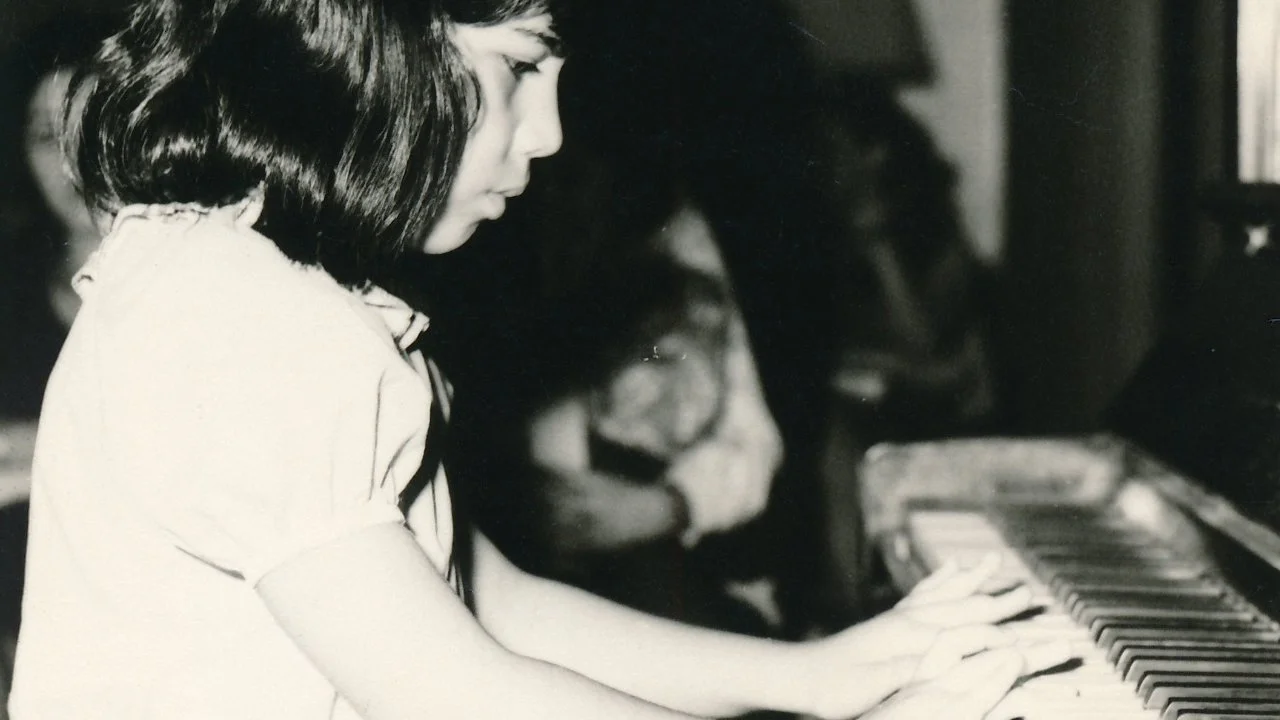
The compliment I hear most often when I'm coaching is, "You're so wise." I accept it graciously, though a part of me, the little girl still in here somewhere, wants to laugh out loud.
For most of my life, the words people used for me were bold, audacious, ambitious, hard-working, adventurous, funny, and, more than once, a little crazy. Wise was not on the list. It didn't show up until the last decade or so, and it didn't arrive because I got smarter. It arrived because I finally started paying enough attention to my mistakes to learn from them. Wisdom came to me late, and it came through cost.
That's the part worth understanding. Wisdom, put plainly, is nothing more than anticipating the consequences of our choices. Being wise doesn't make me smarter than the next person, or better. It means I've committed to the slow work of looking at three things before I decide anything.
The trade-off
The opportunity cost
The second-order consequences
Let me explain each.
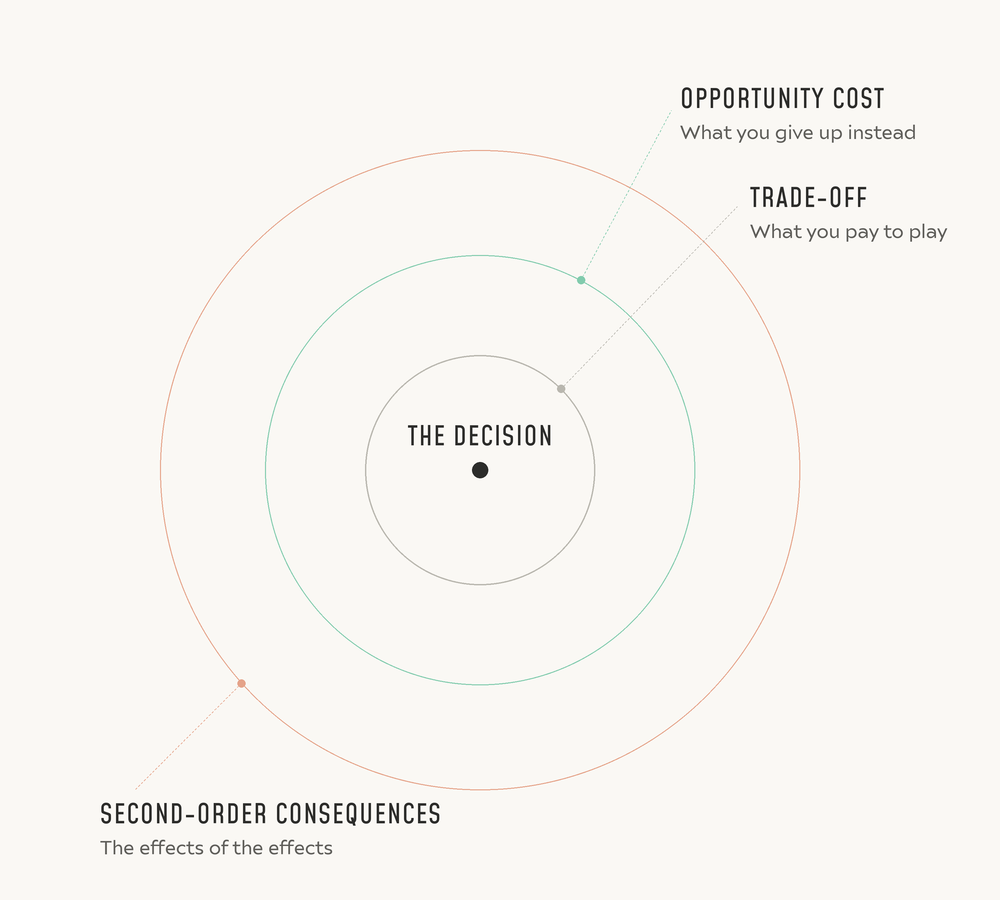
A trade-off is what we pay to play. It's the fee built into any choice, and it has nothing to do with whether the choice is right or wrong. If I decide to have wine with dinner on a special occasion, and I'm not a drinker, the trade-off is a poor night's sleep. The trade-off is a feature of the system, not a flaw in it. A lot of us spend our days, and sometimes our lives, hunting for the decision that costs us nothing, and there isn't one.
An opportunity cost is what we don't get to do, have, or become because we chose something else. This one surfaces constantly with people who are used to pleasing others. They say ‘yes’ without slowing down to notice what they're automatically saying ‘no’ to. Every yes is a no to something. Saying yes to the committee is saying no to the evening at home. Saying yes to the easy client is saying no to the room in your calendar the right client would have filled.
Second-order consequences are the indirect results that arrive after the obvious ones, the effects of the effects. This was my most damaging blind spot for years, and I made my own life harder than it needed to be because of it.
Here's a small, humbling example. Years ago, one of my children lost track of their responsibilities, and we agreed on a consequence: no car for three months. Fair, clear, appropriate.
What I failed to ask was the only question that mattered. Then what? Because the "then what" was simple: my child no longer had a way to get around, so I became it. For three months I became the designated driver, chauffeuring on demand while the passenger relaxed in the back seat and enjoyed the service. I had designed a punishment and quietly handed the sentence to myself. That is a second-order consequence, and it's why I now stop and ask "then what?" before I congratulate myself on a clean decision.
Last week, at a dinner party, the host asked me, "What makes you qualified to coach other people?" A good and fair question, and I appreciated the bluntness of it. I told him the truth. "I know how to help people become wiser."
Behaving wisely isn't magic, and it doesn't arrive automatically with age, as most people assume. It's a practice, not a personality trait. And we are never too old or too young to begin.