Wisdom I Paid For. So You Don’t Have To (Part 1)

Want to listen to the article instead? Tune into Spotify.
Recently, a friend—who is also a Professional Coach—asked me the following question:
What is a piece of wisdom that you feel you have consumed and digested in your life and would now like to share with others? Wisdom that has been an especially powerful force in your life and in who you are today…
I have a few things to share. But first, let's get aligned on what wisdom actually means.
One of the best definitions I've heard comes from Gedale Fenster: "Wisdom is the memory without the emotion." This rings true because how can we learn the genuine lesson embedded in an experience—especially a painful one—if we're still mired in our feelings about it? It's only from a neutral mind that we can say, "Oh. I get it now."
But there's more to wisdom, and it has to do with how it differs from knowledge.
I believe wisdom is metabolized knowledge that we share with others. We can be smart and savvy, but that's different from being wise. Genuine wisdom always has a social good component.
As Chip Conley, founder of Modern Elder Academy, puts it: "Wisdom requires us to evolve from a consuming caterpillar to a benevolent butterfly."
This is what it means to move beyond knowledge gathering—our generation's favorite pastime—to wisdom cultivating: an act that transforms painful life lessons into precious gifts for others.
So, yes. Wisdom.
I told my friend I don't have one piece of wisdom that's better than all the rest.
But I can give her fourteen.
And with that, we were off to the races.
(Because this reflection runs deep, I've chosen to share it in two parts over two weeks. Each post offers seven pieces of wisdom to take in at your own pace.)
1. This, Too, Shall Pass
Perhaps no other truth has helped me survive life's difficult moments more than this one.
But as with almost everything in life, there are two sides to the coin. As desperately as we want hard times to end, we also want to believe the good times will last forever. This wisdom works both ways—it's a comfort and a warning.
There are several attributions for its origin, but my favorite comes from Jewish folklore. King Solomon is said to have asked his wise men to find a ring that would make a happy man sad and a sad man happy. When they couldn't, he had a ring inscribed with the Hebrew phrase "Gam ze ya'avor"—"This, too, shall pass."
I have those words inscribed inside a locket I sometimes wear. It reminds me to appreciate every blessing, especially the blessing of being alive and healthy.
Because, of course, this too shall pass.
2. Whose Business Am I In
I owe this insight entirely to one of my coaches, Byron Katie. Talk about wisdom—Katie is the OG wise woman of our times.
From her, I learned that there are only three kinds of business in the universe: yours, mine, and God's.
Whose business is it if there's a storm during my next race? God's.
Whose business is it if the race director cancels the race? The race director's.
Whose business is it if I'm angry at the race director for cancelling the race? Mine.
Taking myself through this simple set of questions keeps me grounded and responsible for keeping my proverbial side of the street clean. It's so easy to meddle in the uncontrollable (God's business) or in circumstances that aren't ours to manage (your business)—putting ourselves on a road that leads to unintended consequences.
The next time you're unsure about what to do, ask yourself: Whose business am I in?
3. You'll Live
Yep. Just like grandma used to say when we complained about the latest injustice.
Our generation of parents thought it was borderline abusive to say this to a child. Every feeling needed to be validated. Every child needed to be "seen" at all times, or else we feared they'd spend a lifetime in therapy undoing our damage.
God forbid we say to a struggling child, "Honey, you'll live."
But here's the thing: it's a remarkable gift to instill in ourselves—and our children—the belief that we can endure difficult situations without dying because of them. It's the gift of resilience, grit, and perspective.
My inner child thinks she's going to die ten times a day. She's dramatic. She thinks it's the end of the world if it's too hot, someone honks at her, or an injury grounds her. When people are rude or unfair, she thinks making herself whole again requires teaching them a lesson.
But as the adult in this relationship, I hug her and whisper in her five-year-old ear: "I love you. Let it go. You'll live."
4. Take a Hike
Often, this is literally the solution.
Something magical happens when we carry what feels like an impossible problem onto a trail, into a park, or along a beach. The combination of movement, fresh air, and earth beneath our feet unlocks something. Solutions that feel out of reach in our everyday environments appear effortlessly.
Time in nature may not erase the problem, but it almost always makes it less daunting. And that shift—even a few degrees—can be enough to get us back in the game.
Wallace Stevens wrote, "Perhaps the truth depends on a walk around the lake."
I took those words so seriously that I moved to a little village by a lake.
It changed my life.
5. Start With a Question
It's not an oversimplification to say that most people come to coaching seeking answers.
What should I do next? How do I have a difficult conversation with my partner? When is the right time to launch my business? How do I set boundaries without being selfish? Why do the same problems keep showing up in my life?
The list is endless. But the one thing every quest has in common is that it begins with a question.
Yet most of us believe we should begin with an answer. We don't speak up, contribute, or collaborate because we think that without the answer, we have nothing to offer.
The opposite is true. The right question is often more valuable than any answer.
6. Develop a Taste for Saltwater
I don't remember where I first heard this counterintuitive truth, but it has become a consistent practice in my life.
Most people avoid pain. I've trained myself to see discomfort as growth.
I love ideal circumstances as much as the next person. But when I'm operating under ideal circumstances, 100% of the time, I'm exactly the same person at the end as I was when I started.
Regular water is good, but it doesn't make me grow, learn, or transcend. It doesn't make me more confident, capable, or skilled.
But the saltwater of pain, discomfort, and unexpected challenge? It always leaves me with a gift.
7. Become Anti-fragile
I've been working on this skill since childhood, but I didn't have a name for it until Nassim Taleb coined the term.
We all know what it means to be fragile: easily breakable. So what's the opposite?
Most people say resilience.
When a glass falls to the ground, it shatters—it's fragile. When a plastic cup falls, it bounces—it's resilient.
But there are things in life that, when faced with adversity, don't just survive. They get stronger. That's anti-fragile.
It's good to become resilient.
It's a superpower to become anti-fragile.
Stay tuned for Part 2, coming next week.
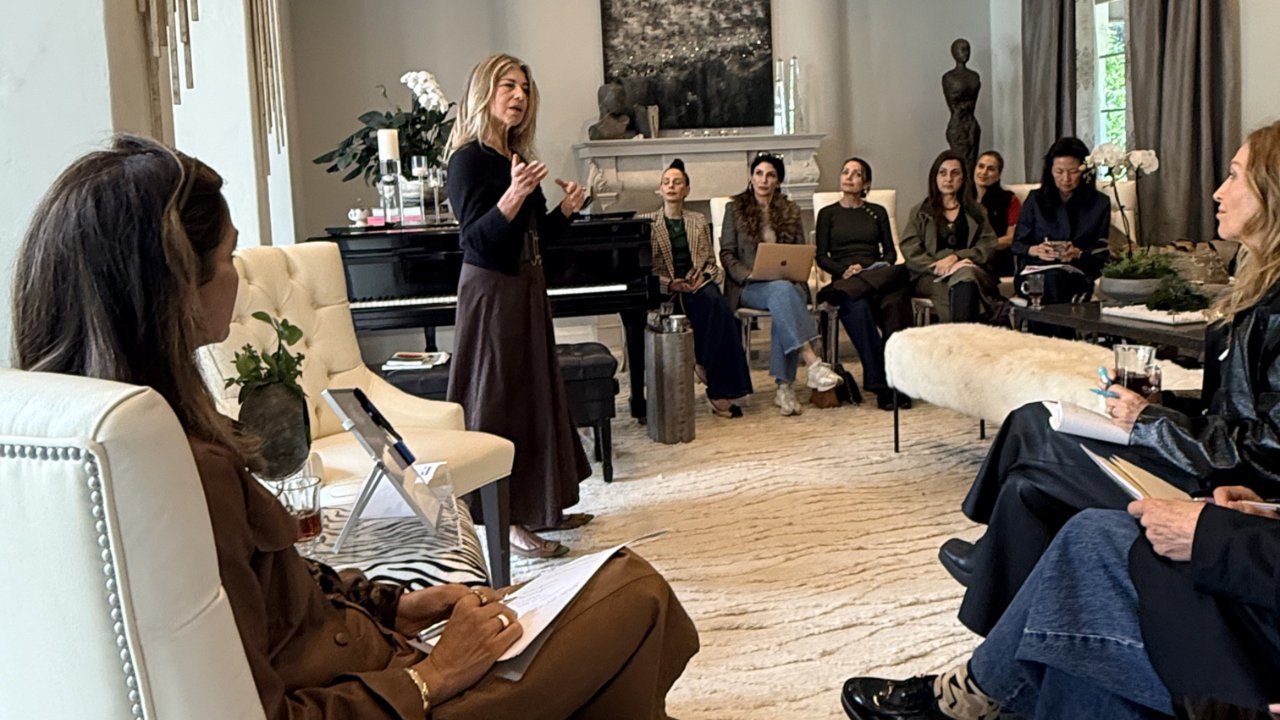
Photo credit: D. Bana Photography