Want to listen to the article instead? Tune into Spotify.
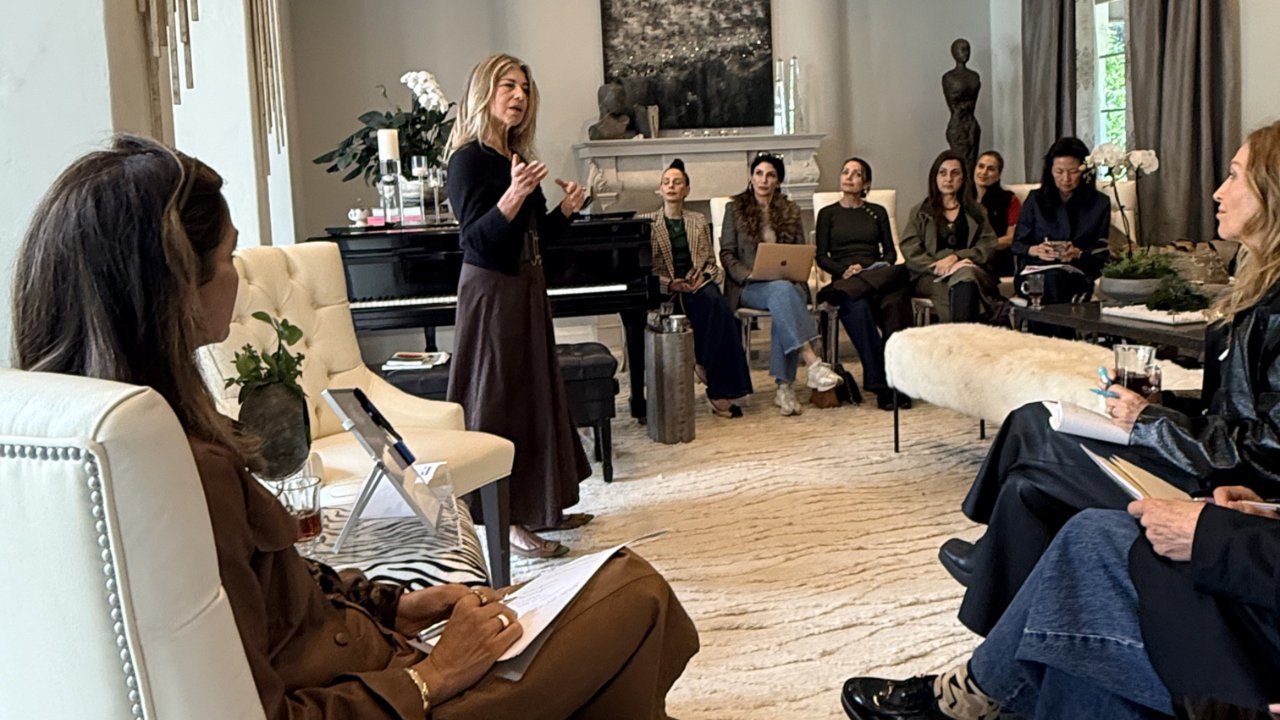
Recently, I held a goal-setting masterclass for a group of accomplished women. Each a powerhouse in her own right.
Shortly after I began, I asked a simple question: "Why set goals?"
The responses varied, but one stopped me. A woman I'll call Lara said, "To have purpose."
Her answer took me back to the hundreds of coaching conversations I've had about purpose—conversations with intelligent, successful people who carry a quiet ache. They believe something is missing. They believe that if they could just find their purpose, the ache would resolve.
They're looking for the wrong thing.
Over the years, I've come to see three myths about purpose that keep people stuck.
The first myth is that your purpose is unique to you.
We've absorbed this idea that each of us has a singular, distinctive purpose—something only we can manifest. Think of the narratives we celebrate: the founder who was "born to build," the artist who "couldn't not create," the leader whose purpose was clear from childhood.
But most of us aren't founders, prodigies, or people whose calling announced itself early. Most of us are mothers, sisters, teachers, neighbors, creators of uncelebrated things.
Does that mean we lack purpose? Of course not. But the myth makes us feel like we do.
The second myth is that purpose must be "found."
This myth sends people on a lifelong scavenger hunt. We take personality tests, read books, attend workshops, switch careers—all in pursuit of the elusive answer to "What is my purpose?"
I see this most often in clients at midlife. They've built impressive lives—careers, families, reputations—and yet feel lost. Not because they took a wrong turn, but because they believe they never found the thing they were "supposed" to find.
The search itself becomes the problem. You can't find what was never hidden.
The third myth is that once you find your purpose, life will feel meaningful.
This is the myth that led Lara to her answer. We believe that a goal—the right goal—will create the sense of purpose currently missing from our lives. And once we have purpose, meaning will follow. But purpose and meaning are not the same thing. Conflating them is the source of tremendous confusion and suffering.
Let me untangle these.
Your purpose is simply your reason for being here. And here's the truth most people resist: you arrived already "on purpose." Your existence is not a problem to be solved or a worth to be gained or proven. No one asks a newborn baby to justify their purpose. And nothing fundamental has changed since you took your first breath.
You are here. That is the purpose.
Your purpose is to live your life with as much consciousness as you can bring to it. To create the moments of your days—not wait for them to be handed to you. To be awake to your own existence. That's it. That's the purpose. You already have it. You've always had it.
Meaning is something different. Meaning is the flavor you add to a life already on purpose, making everything feel alive. It's the felt sense that what you're doing matters—not in some abstract, universal way, but to you.
Here's the painful part: you can have a purposeful life that feels utterly devoid of meaning. How? By filling your days with actions that are purposeful in the generic sense—productive, responsible, even admirable—but that don't align with what you actually value.
You can build a successful career that means nothing to you. You can raise a family while feeling invisible within it. You can achieve every goal on your list and still feel hollow. Purpose without meaning is an empty container. You're doing all the things you’re supposed to, but none of it makes you feel alive.
So where does meaning come from? It isn't found. It's created. And the raw material for meaning is your values.
When your actions align with what you genuinely care about—not what you think you should care about, not what your parents valued, not what looks impressive—you experience meaning. It's that simple.
And that hard.
The hard part is that most people have never done the serious work of uncovering their actual values. They've inherited values. They've performed values. They've assumed that what they were taught to value is what they do value. And so they build lives that look right but feel wrong.
I can help a client create their dream career, relationship, or body. But if that "dream" isn't downstream from their own values—if it's just what they think they should want—I'm not solving the problem. I'm just kicking the emptiness can down the road. I don't do that. And I don't want you to do it either.
Here's what I want you to do instead.
Stop searching for your purpose. If you're alive, that question has been answered. You're here. You're breathing. You have a life to create. The search for purpose is a distraction from the actual work—which is to live that life consciously.
Stop believing that finding your purpose will deliver meaning. It won't. Purpose is the container. Meaning is how you fill it. They're not the same thing, and one doesn't automatically produce the other.
Start creating meaning on purpose. This means getting honest about your values—what you actually care about, not what you've been taught to care about. And then, slowly, deliberately, aligning your actions with those values. It doesn't require a dramatic life overhaul. It requires small, conscious choices. One conversation. One boundary. One time saying, “I love you and no.” One hour spent on what matters instead of what's expected. Meaning accumulates. It's built, not found.
After the masterclass, I thought about Lara's answer. "To have purpose."
She wasn't wrong to want that feeling. But the feeling she's actually after isn't created through identifying her purpose. It comes from creating meaning. It's the sense that her life—the one she already has—is hers. That what she does each day, aligns with who she actually is. That feeling comes from knowing what you value, and then setting goals and taking actions that honor those values.
Lara doesn't need to find her purpose. She has one.
What she needs—what most of us need—is to stop searching and start building. Not a bigger life, but a more meaningful one.
The one that was waiting for us all along.