Wisdom I Paid For. So You Don’t Have To (Part 2)
Want to listen to the article instead? Tune into Spotify.
The tuition was steep. The lessons were worth it.
Let's pick up where we left off. If you missed Part 1, go back and start there. These are truths I learned the hard way—through mistakes, through pain, and through the slow humbling that life hands out to anyone paying attention.
Here are wisdom pieces 8 through 14.
8. It's NOT the Thought That Counts
There was a time when I believed intentions were enough. That wanting to change, planning to act, meaning well—these things mattered.
They don't.
Intentions are seeds buried underground. A seed that never breaks through the soil isn't potential. It's compost.
Here's the trap: when we set an intention, we get a hit of adrenaline. We feel motivated, excited, and alive. And our brains—those sneaky organs—mistake this feeling for achievement. We get the emotional reward of having done the thing without actually doing the thing.
This is why so many of us spend years talking about what we're going to do. Every time we revisit the dream, we get another little boost. But the boost fades. And eventually, so does the dream.
My teacher Yoda said it simply: "Do or do not."
To which I've added my own corollary: Do, or shut up about it.
9. Take the Long Cut
I was the queen of shortcuts. If there was a corner to cut, I cut it. If there was a hack, I hacked it. Efficiency was my religion, and I was devout.
Until life handed me the bill.
Here's the truth: there is no such thing as a shortcut. There's only the illusion of one—followed by the realization that you have to go back and do the work you skipped.
Anything worthy requires a minimum commitment. That's just the price of admission. But excellence? Excellence demands the long way.
Your success is directly correlated to the time, undivided focus, and patience you're willing to invest. Period.
Shortcuts are for amateurs—people content to dance on the surface of life. For those of us who crave depth, who want to actually become something, we must learn to love the long cut.
The scenic route isn't the detour. It's the destination.
10. Space Is Where Miracles Happen
I'm big on miracles. All shapes and sizes.
I believe in supersized miracles—the parting of the Red Sea. Medium-sized ones—an injury healing completely right before my big race. Seemingly small ones—my child calling from the other side of the world at the exact moment I'm thinking of them.
But the miracles I want to talk about here are subtler. The kind you only recognize in the rearview mirror.
The thought that dropped into your mind from nowhere—the one you acted on, and it changed everything.
The stranger you chatted with casually, who introduced you to the love of your life.
The easy hike with your child—that became the deepest conversation you've ever had.
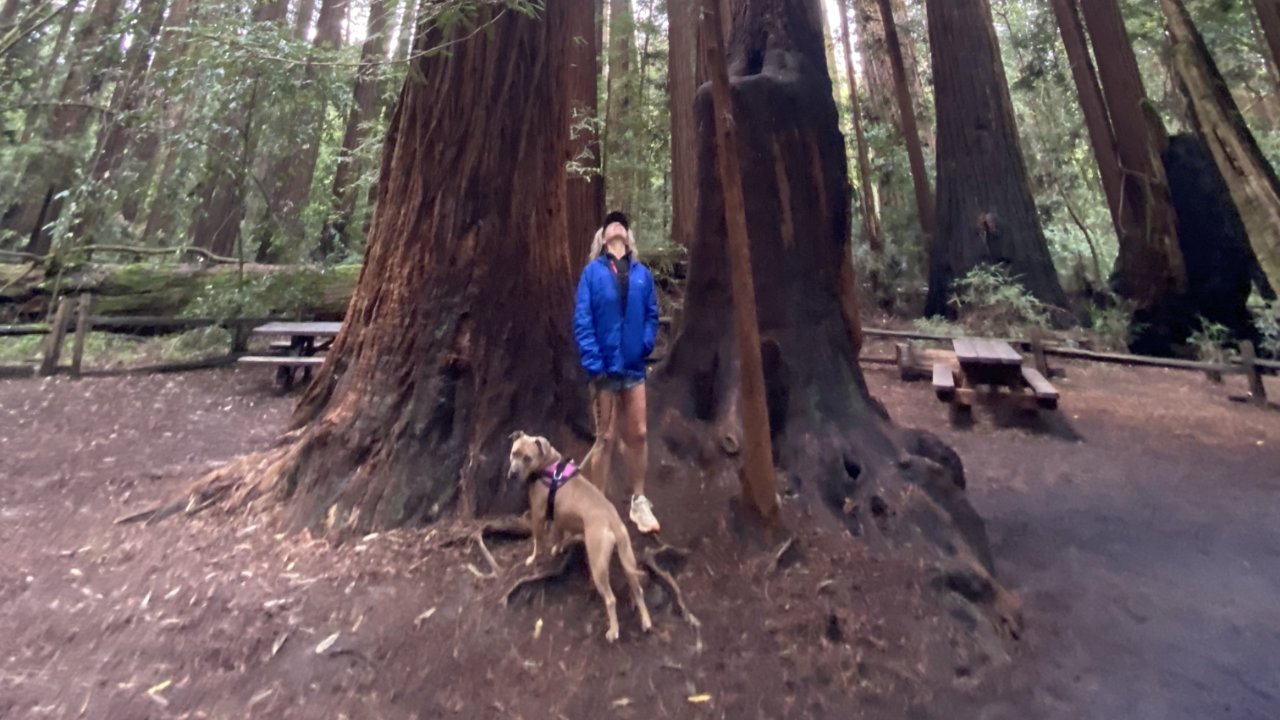
The weekend in the Redwoods—where you discovered desires you didn't know lived inside you.
These miracles don't arrive on command. They can't be scheduled or optimized. They only show up when there's room for them.
Build white space, and miracles will come.
It's another version of "build it, and they will come"—except what you're building is emptiness. Unstructured time. Margin. The gaps between the scheduled things.
That's where the magical stuff of life sneaks in.
11. Desire Trumps History
If I believed our past achievements limit our future capabilities, I'd be in the wrong line of work.
And yet—how many of us judge what we're capable of by what we've already done? We look backward to predict forward. We let old data define current potential.
Let me tell you about grade school PE class.
I was that kid. The one picked last—or more accurately, the one reluctantly assigned to whichever team had the misfortune of picking last. I can't blame them. I wasn't good at sports. I had the coordination of a baby giraffe discovering its legs.
Fast forward a few decades. I now design my entire life around my sport. Training schedules, race calendars, recovery protocols—everything revolves around it.
What changed?
Only desire.
My desire to spend time on trails led to curiosity about trail running. Curiosity led to commitment. Commitment led to discovering a potential I never imagined I had.
Your past is a data point. Useful, maybe. But not destiny.
Your desire—that burning, irrational pull toward something—is the force that builds your future. Trust it more than your résumé.
12. Stop Managing Expectations
I was always bold. Fear of failure? Never really my thing.
But when I became a parent, a new kind of fear crept in—so unfamiliar I didn't even recognize it for years. It just felt like instinct.
It was the fear of my children experiencing disappointment.
I hadn't feared failure for myself. But my children's failure? That felt unbearable. So I did what any well-meaning parent does: I tried to protect them from it.
This looked like "managing expectations."
"You know, very few people get into that school." "Don't get your hopes up." "It's really competitive."
I thought I was being helpful. I was actually being harmful.
Here's what I eventually learned: I wasn't serving my children's long-term success by removing the possibility of failure. I was robbing them of the chance to build resilience.
The shift looked like this:
Before: "You know, very few people get into that school."
After: "Give it everything you've got. And if it doesn't work out, you'll be fine. You always are."
It was actually my daughter who called me out. She caught me mid-sentence in my expectation-management routine and said:
"You know, Mom, I'm gonna get disappointed anyway—whether you try to manage my expectations or not. I have high expectations. Yes, I'll be disappointed if I don't achieve what I want. But I'll be fine. So can we just stop doing this?"
Enough said.
13. Pick Your Hardest Virtue—Then Practice It Daily
My teachers here are the Stoics, particularly Marcus Aurelius. If you haven't read Meditations, stop reading this and go get it. It's a manual for living an aligned life.
The Stoics identified four cardinal virtues:
Wisdom
Justice
Courage and
Temperance
Here's what I've noticed: most of us know which virtues come naturally—and which ones don't. And our instinct is to double down on what's easy. We practice our strengths and avoid our weaknesses.
I'm inviting you to do the opposite.
For me, the hardest virtue is forgiveness. It does not come naturally. I hold onto things. I remember. And I've paid a real price for this—in peace of mind, in relationships, in the weight I carry unnecessarily.
Marcus Aurelius aspired to "forgive a man who has wronged one, to remain a friend to one who has transgressed friendship, to continue faithful to one who has broken faith."
Honestly? That sounds superhuman to me. I'm not there.
But as the Mishnah teaches: "It is not yours to finish the task, but neither are you free to set it aside."
So I practice. Imperfectly. Daily.
What's your hardest virtue?
14. Silence Before Wisdom
If wisdom is knowledge metabolized, then silence is the digestion.
Viktor Frankl wrote: "Between stimulus and response, there is a space. In that space is our power to choose our response."
That space? It's made of silence.
Think of any moment you regret. Any conversation that went sideways. Any reaction you wish you could take back. I'd bet money that if you'd paused—even for a breath—you could have contributed to a different outcome.
But we live in a world that devalues silence. We're rewarded for quick responses, hot takes, and confident proclamations. Social media trains us to throw our outrage into the void immediately, as if speed equals significance.
It doesn't.
That's just spitting in the wind.
The wise person chooses silence over noise. Quiet confidence over outrage. Powerful action over intellectual one-upmanship.
The pause isn't a weakness. It's where wisdom lives.
Now It's Your Turn
That's fourteen pieces of wisdom—truths I learned through failure, frustration, and the slow accumulation of years. Some of them probably landed. Some might have stung. Maybe one named something you've been circling for a while without quite having words for it.
I don't want this to be a one-way conversation.
I want to hear from you. Specifically:
Which one resonated most? Was there a piece of wisdom that made you stop and reread it? That felt like it was written for you? Tell me which one—and why.
Which one challenged you? Sometimes the wisdom that irritates us is the wisdom we most need to sit with. Did any of these make you bristle or push back?
What questions came up? Is there something here you want me to unpack further? A concept that deserves a deeper dive?
What's your wisdom? After fourteen pieces of mine, I'm curious: What's a truth you paid dearly for? What do you know now that you wish you'd known sooner?
What should I write about next? If there's one of these fourteen you want me to explore more deeply—a full post, a more thorough examination—I'll write it. But you have to tell me which one.
Email me or leave me your comment below. I read everything.
Wisdom isn't meant to be hoarded. It's meant to be shared, questioned, refined, and passed along. These fourteen pieces aren't the final word—they're the beginning of a conversation.
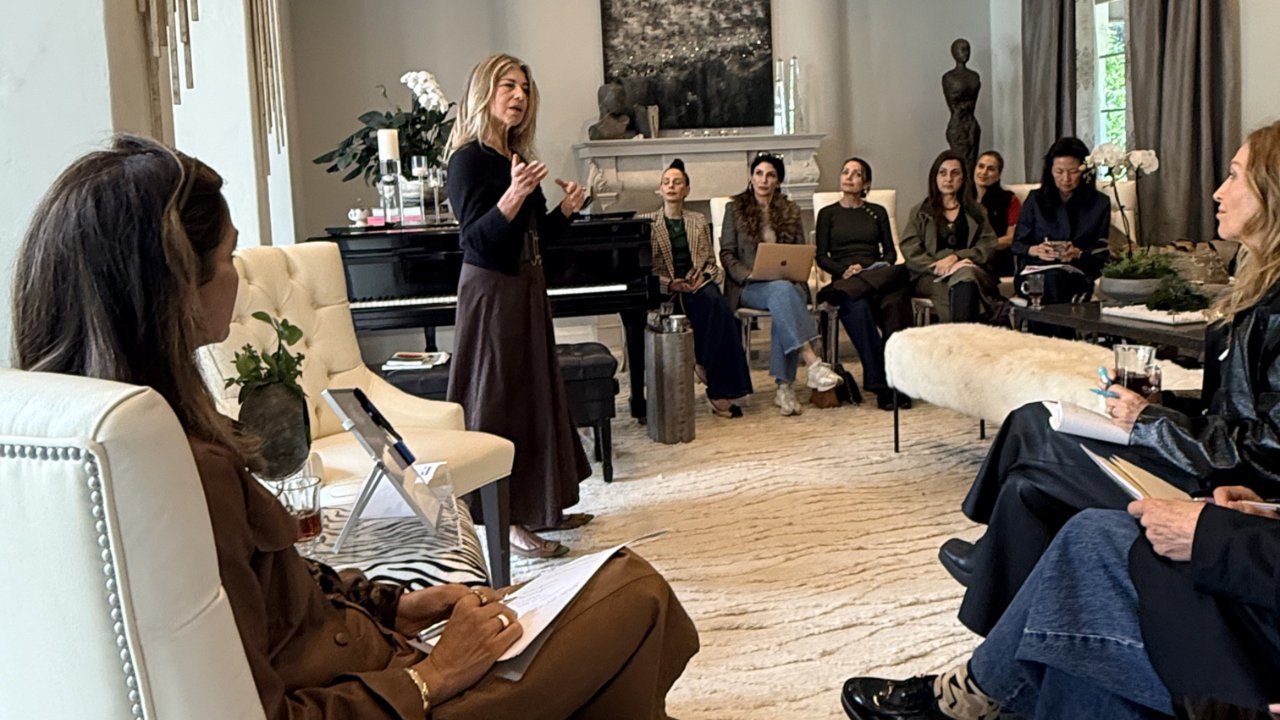
Photo Credit: Visionary Women