Want to listen to the article instead? Tune into Spotify.
The agreements we make with each other shape the relationships we get.
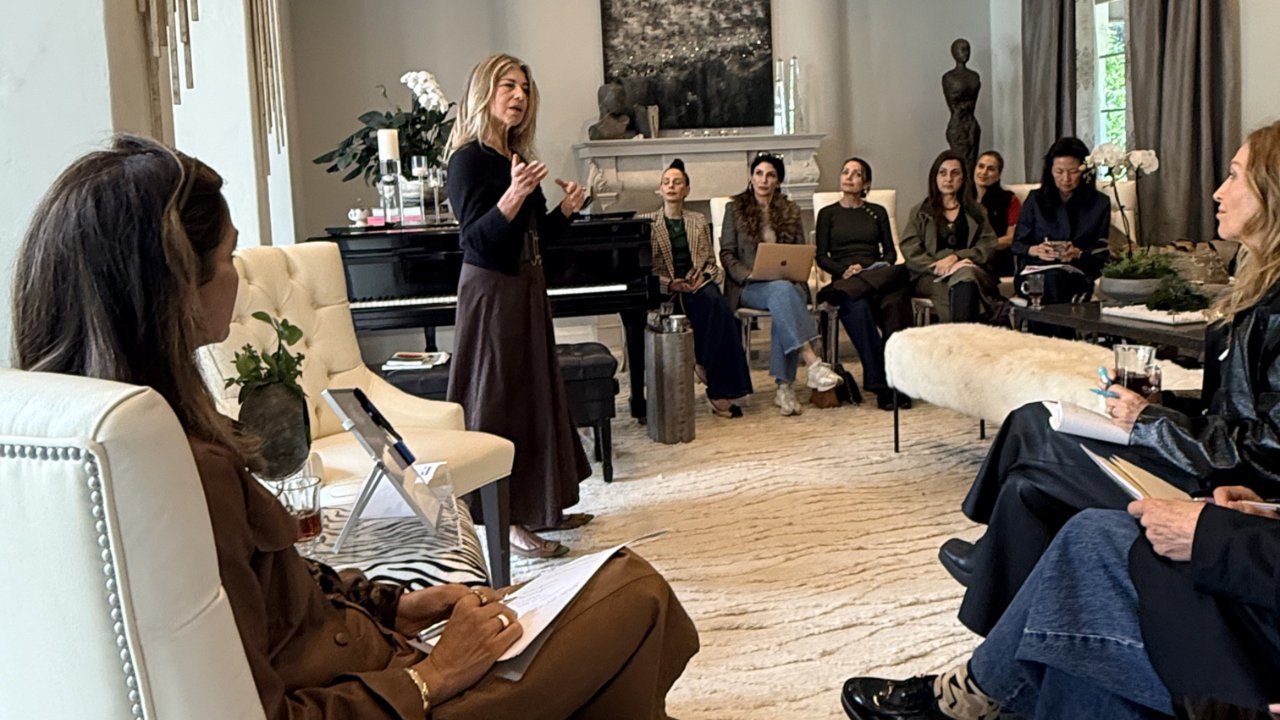
One of the most valuable relationships in my life is with the women in my private coaching group, The Wisdom Circle. By design, no one here is new to coaching, and the group's greatest value lies in the collective wisdom the women share with one another.
That's also where the greatest danger lives. The danger of quietly becoming a support group rather than a transformational one. To be clear, we are fiercely supportive of each other. But our first commitment is to the growth and expansion of each woman, and support and growth are not always the same thing.
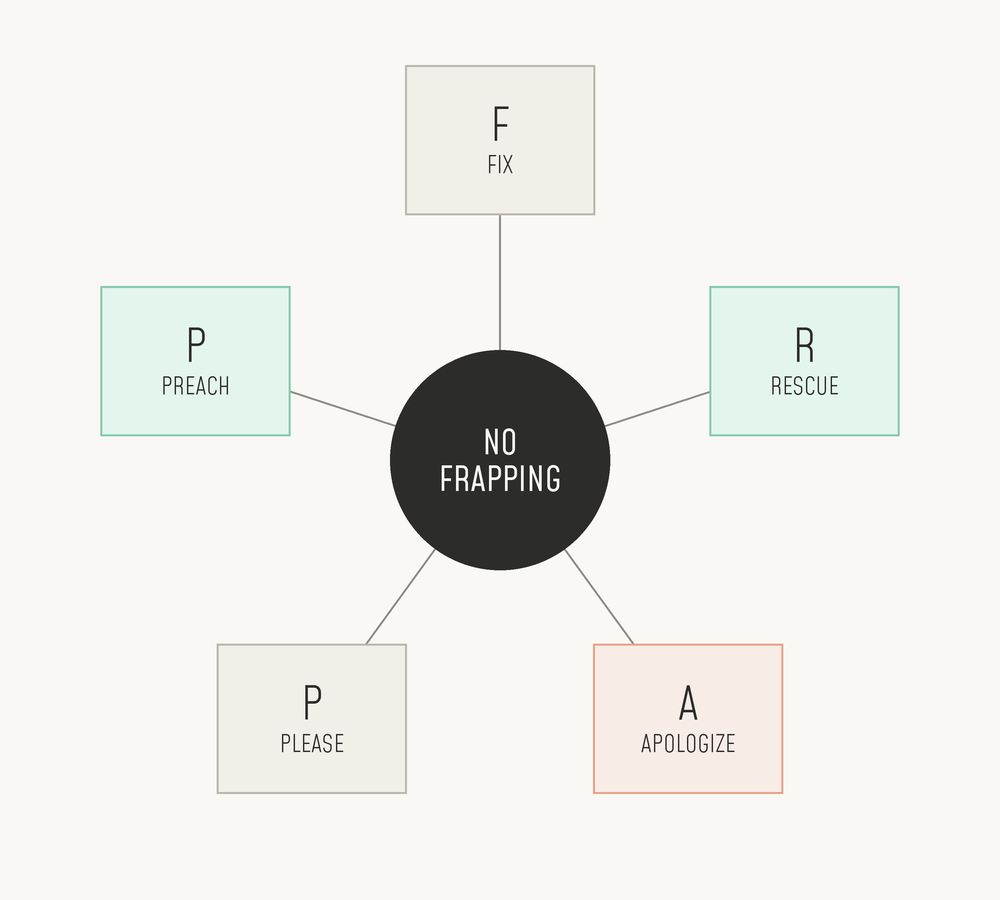
That's why our first agreement is called No Frapping. It's an acronym. When one woman is expressing herself, no one else is allowed to rush in to:
Fix
Rescue
Apologize
Please, or
Preach
Most of those are easy to recognize. Fixing, rescuing, pleasing, and preaching all announce themselves. The one that surprises people is apologizing, because it looks and feels to us like kindness. But a reflexive apology quietly turns the conversation around. It recenters it on my discomfort and asks the woman who was being vulnerable to stop and reassure me. I know we mean to be polite and kind, but without realizing it, we turn that attention back to ourselves.
Let me show you what No Frapping actually looks like, because the agreement is easy to describe and hard to keep.
A woman in the circle shares something raw. A decision she's ashamed of, or a fear she's never said out loud. And you can feel it in the room, the collective intake of breath, five women ready to jump in. One has the solution. One wants to tell her it's not her fault. One is already reaching for what will make the feeling go away. Every impulse is loving. Every impulse is also about us, about our own discomfort with her discomfort.
So instead, we hold. We let her words land and stay landed. And then, when someone does speak, it isn't advice. It's a woman offering her own hard-won experience of something similar, no lesson attached, just handed over. That moment, the held breath and then the honest offering instead of the rescue, is where the real work happens. It almost never happens when we frap.
Here's the truth underneath this powerful agreement. If you can't wait to speak because you want to fix, rescue, or please the other person, you are thinking and caring more about yourself than about the person you're trying to support.
A good way to know is to check in with your body. If you feel an urgent need to jump in, that’s a sign you’re about to enter the Frapping Zone.
So before you speak to someone who's seeking counsel, No Frapping asks you to run a quick internal check:
Do I see myself as the one with the solution?
Am I so uncomfortable with this person's vulnerability that I need to rescue her, and myself, out of the discomfort?
Am I about to apologize out of habit rather than intention?
Am I trying to please this person rather than serve her?
Am I about to deliver the truth as though I'm the one who holds it?
If you answer yes to any of these, slow down and switch to a different mode of contribution.
We still want every woman's life experience in the room. That's the point of the group. But the contribution has to take the form of sharing our own personal, often hard-earned wisdom, not prescribing hers. The filter is two questions:
Is this useful?
Is this helpful?
No Frapping can elevate any relationship that matters to you. I coach across five domains of life: Relationships, Career, Personal Development, Parenting, and Leadership. And the longer I do this work, the more I see that all five are really one. They all sit under Relationships. People skilled at building strong relationships tend to excel everywhere else, because everything else is made of relationships too.
Here's how No Frapping shows up in each:
Career — Build a career that brings your own contribution and gifts to the world, rather than one that pleases the preachers in your life.
Parenting — Don't rescue your child unless the situation is truly dangerous, which means examining your own definition of dangerous, because most of what we rescue children from is discomfort, not harm.
Personal Development — Don't try to fix yourself. You're not broken. Choose progress over perfection.
Leadership — Don't let pleasing get in the way of serving. Choose honest, timely feedback over comfort in the moment. Brené Brown's principle holds here: clear is kind, unclear is unkind. When we soften the truth to spare someone's feelings, we usually spare our own.
Relationships — All of the above, plus this: don't apologize unless the moment genuinely calls for it. Acknowledge instead, and make it right with different words and actions.
Every one of these is the same discipline. It's the willingness to sit with another person's discomfort without reaching for the thing that would relieve yours. To trust that the most useful thing you can offer is rarely the rescue, and almost always your honest presence and your own hard-won experience, handed over with no strings on it.
That's not the easy kind of support. It's the kind that changes people.