Your Past Self, the Unreliable Narrator
This post is the second in my series on the three relationships that shape your life. If you're just arriving, start with the first post—it sets the stage for everything that follows, and the series is best read (or listened to) in order.
Want to listen to the article instead? Tune into Spotify.
In the last post, I introduced you to my (and your) three Selves: Past, Present, and Future, and promised we'd start with the hardest one to love.
So here she is. My Past Self.
I told you she's a bit delusional, with the memory of a hamster for anything good and the memory of an elephant for anything I'd rather forget. That part I played for laughs. But I want to be honest with you about something, because this is a series about real relationships, and real relationships don't get better when we're being polite about them.
For a long time, I didn't just find my Past Self difficult. I was at war with her.
She was the one who replayed the conversation I'd fumbled, at 2 a.m., on a loop.
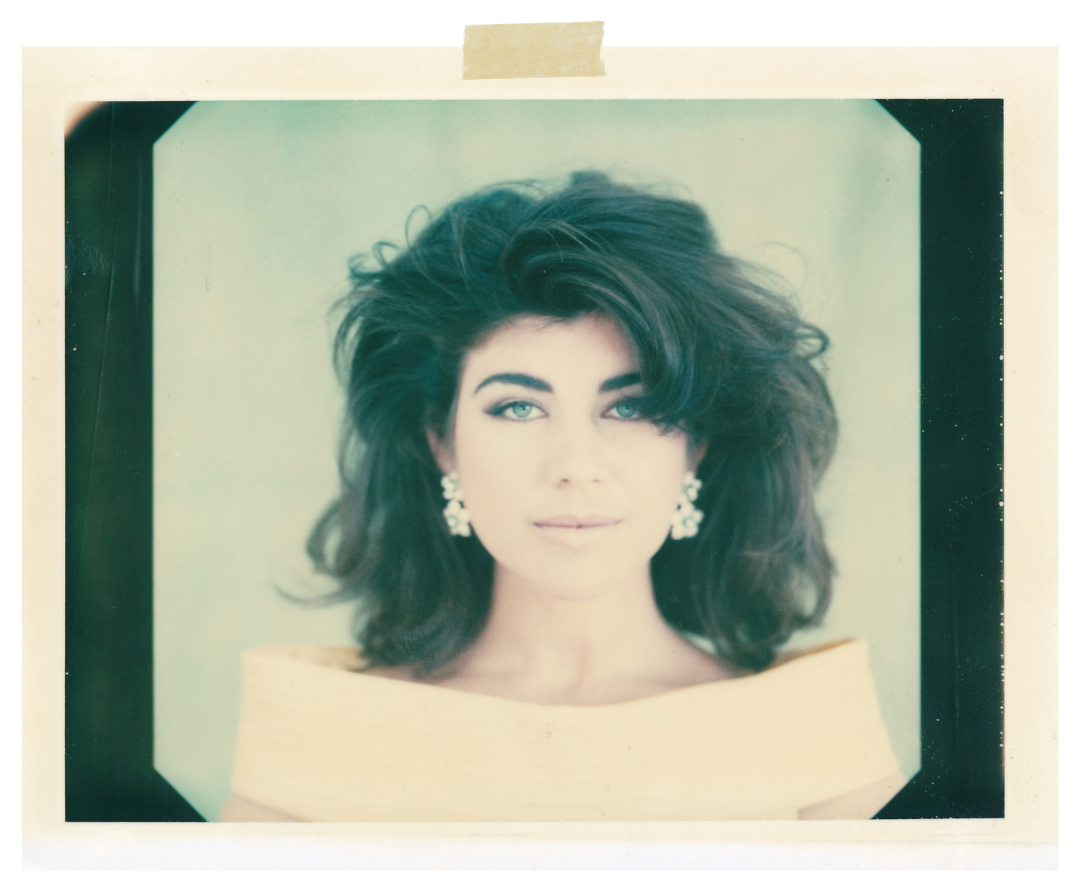
She was the one who pulled up the photo of me at thirty-five and whispered, "Look how much you've changed."
She kept a meticulous file on every decision I'd gotten wrong and somehow lost the paperwork on everything I'd gotten right.
If a friend had spoken to me the way my Past Self did, I'd have stopped taking her calls. And yet I let her narrate my life.
Here's what I've learned since: a Past Self you're at war with doesn't stay in the past. She moves in. She sits at the table during decisions she has no business being part of, and she makes the present smaller out of fear of repeating her own history.
So the work, and it is work, is to stop fighting her and start forgiving her.
The first thing to understand about your Past Self is that she's not a reliable narrator. She's not lying, exactly. She's just running old software.
Our minds are built to hold on to threat. The decision that embarrassed us, the risk that didn't pay off, the moment we looked foolish: those get filed in permanent ink, because somewhere deep in our wiring, remembering the danger is what kept us alive. The thousand ordinary days that went fine?
Deleted to make room.
So when you look back, and the past seems like a highlight reel of your failures, that's not the truth of your life. That's just the filing system.
Once I understood that, I could stop taking my Past Self's opinions as fact. She's not reporting what happened. She's reporting what scared her.
A dear client of mine, someone who's been doing the deep work of transformational coaching for some time now, sent me a note that I've read and re-read more times than I can count.
Here it is, in full:
We easily have regrets and wishes after the fact for having made different decisions. The more time passes, the stronger or clearer these 'regrets' become. But I think it's mainly because we forget that at the time we made those decisions, we also made a trade-off, which we tend to forget about. And if faced with the same choices, we would, more often than not, make the same choice again.
Of course, we all have decisions that were plain mistakes. But when I catch myself thinking… oh, I wish I had done that instead, I ask myself a follow-up question. What was my choice at that time, and could I, or would I, have really chosen differently?
I couldn't have put it better myself.
Read it again, because there's something quietly radical in my client’s note.
Most of what we call regret is really just forgetting. We look back at a fork in the road and torture ourselves over the path we didn't take, but we conveniently delete the reason we chose the path we did. We forget the trade-off. We forget what we were protecting, what we couldn't yet have known, who we were at the time, and what that person needed.
The job I had that I "should" have left sooner? It also helped me raise my family and taught me a level of leadership I lacked. The relationship I "wasted years" on? It was also where I learned what I would and wouldn't accept ever again. My Past Self made a trade. She just forgot to keep the receipt.
So now, when I catch myself in the old loop, I wish I'd done it differently, I ask my client's question. What was my actual choice at the time? Knowing only what I knew then, being only who I was then, would I, and did I have the capability, to have chosen differently?
The honest answer, almost always, is no. And "no" is where forgiveness begins. Because you can't forgive someone you still secretly believe should have known better. You forgive her the moment you realize she did the best she could with what she had.
In the first post, I said forgiveness, empathy, and unconditional love are skills, not weather that happens to us. I meant it. Here's what practicing them with your Past Self actually looks like.
Forgiveness is the trade-off question above, asked again and again until the charge goes out of the memory. It's not pretending the mistake didn't happen. It's deciding to stop charging her interest on a debt she already paid.
Empathy is going back to the moment of the decision and meeting her there, not with the information you have now, but with the information she had then. Picture her. What was she afraid of? What was she hoping for? What was she carrying that you've since set down? It's almost impossible to stay angry at someone once you really see how little they knew and how hard they were trying.
Unconditional love is the big one, and it's the simplest to say and the hardest to do: loving her not because she got it right, but regardless of whether she did. The same way you'd love a child who struck out at the game. You don't love them less for the strikeout. You love them, period, and then you help them with their swing.
Do this work long enough (forgiveness, empathy, love, practiced and practiced) and something shifts. The relationship stops being a battle you're trying to win and becomes one you're actually in. And that's when you discover the turn I never saw coming when I was still at war with her.
My Past Self isn't there to be defeated. Once I stopped fighting her, she turned out to be useful, not as a prosecutor, but as a witness. She holds every trade-off I've ever made, every lesson I paid full price for. When I forgive her instead of fighting her, all of that becomes available to me as wisdom instead of being weaponized as regret.
I don't want to erase her. I want to thank her. Marshall Goldsmith has a line I love: "What got you here won't get you there." That's exactly my Past Self. She got me here, making the best calls she could with what she had, and I owe her everything for it. That younger woman I used to resent is the whole reason I get to be the one writing this.
She’s brought me far, but she doesn't have the map, the knowledge, and the skills for where I'm going next. Honoring her and outgrowing her turns out to be the same act of love.
So if you've been at war with your own Past Self, I'll offer you what I'd offer any client: lay down the weapons first. Not because she was right. Because the war is costing your Present Self too much.
As a practice for this week, pick one regret you keep circling back to, just one, and ask it honestly: What was my real choice at the time, and would I truly have chosen differently? Then notice what happens to the regret when you stop forgetting the trade-off.
Next week, we move from the Self who's hardest to love to the only Self you can actually do anything about: the Present Self. She's the one holding the steering wheel right now, and she needs a very particular kind of parenting.
Until then, which regret are you ready to forgive? Send me a message on the website or DM me. I read every single one.

In 10 minutes or less, you'll get a clear picture of which area of your life is quietly draining everything else—and exactly where to focus first.
For each question, choose the answer that best reflects where you honestly are right now.
There are no right answers, just your truth.
Once you complete the audit, I'll share with you three handpicked reads from my journal (or you can listen to their audio versions)—chosen specifically for the area that needs your attention the most at this time.