
Not a day goes by that I don't get the question, "How is life coaching different than therapy?"
The two have one very important aspect in common: they are both available to allow us a better understanding of ourselves, giving us access to live more purposefully. From there, they diverge in a few important ways.
Broadly speaking (and there are many different kinds of therapy), therapy looks at our past to identify what needs healing. Life coaching touches on the past to gain insight regarding the obstacles to our success, but from there, coaching work is entirely anchored in the present and the future.
Therapy aims to heal. Life coaching aims to get us what we deeply desire in our lives. Therapy often takes us to functional. Life coaching takes us to optimal.
In therapy, we show up to explore and gain insight. In life coaching we are supported, challenged, and held accountable for taking all necessary actions to reach our specific goals.
So whether you choose therapy or life coaching (or any other practice that speaks to you), don't put your own joy and purpose on the back burner. Ask yourself what is more important today than an investment in your happiness and freedom?

Think about the last time you called someone “ambitious”. Was it entirely a compliment? Or did a small shadow come with it, the sense that you were naming something a little grasping, a little too much? Most of us have learned to hear ambition as a warning. We picture the people who claw and accumulate and never seem satisfied, and we file ambition next to greed, as if they were the same appetite.

One of the most common requests I hear, especially from business leaders and parents, is some version of “How do I motivate my employee, my team, my kid?” I tell them I have good news and bad news. Most people want the bad news first. So here it is: based on my years as a business owner, a parent, and a coach, there is no such thing as motivating another person.

I worshipped Intensity for more decades than I care to admit. "Go big or go home" was my motto, and I lived it everywhere. Instead of eating well most days, I would overeat for a stretch and then starve myself for a day to even the books. Instead of running a few miles regularly, I would run sporadically and then try to make up the lost mileage in one punishing weekend.

If I were allowed to keep only one tool in my coaching toolbox, with every other system and framework taken away, I know which one I'd keep. It's the one I call GIGO. Garbage in, garbage out. It's a crude name for an idea that turns out to be ancient. There's a line in Proverbs I've been sitting with, chapter 4, verse 23. It's usually translated, "Above all else, guard your heart, for from it flow the springs of life."

I hear these words often from my clients, regardless of age or background. They express a universal wish for the three C’s—Clarity, Courage, and Confidence—that so many people hope to gain from professional coaching. But let me share a dirty little secret of the work. The problems we think we're facing because we lack clarity, courage, or confidence are rarely the actual problem.
I'm working with a client who was a colleague of mine when I was a fashion executive. Working together is putting it generously, because I ran a flagship and she ran an entire corporate department. She's younger than I am, but I looked up to her the way a child looks at an adult, as though they're invincible.

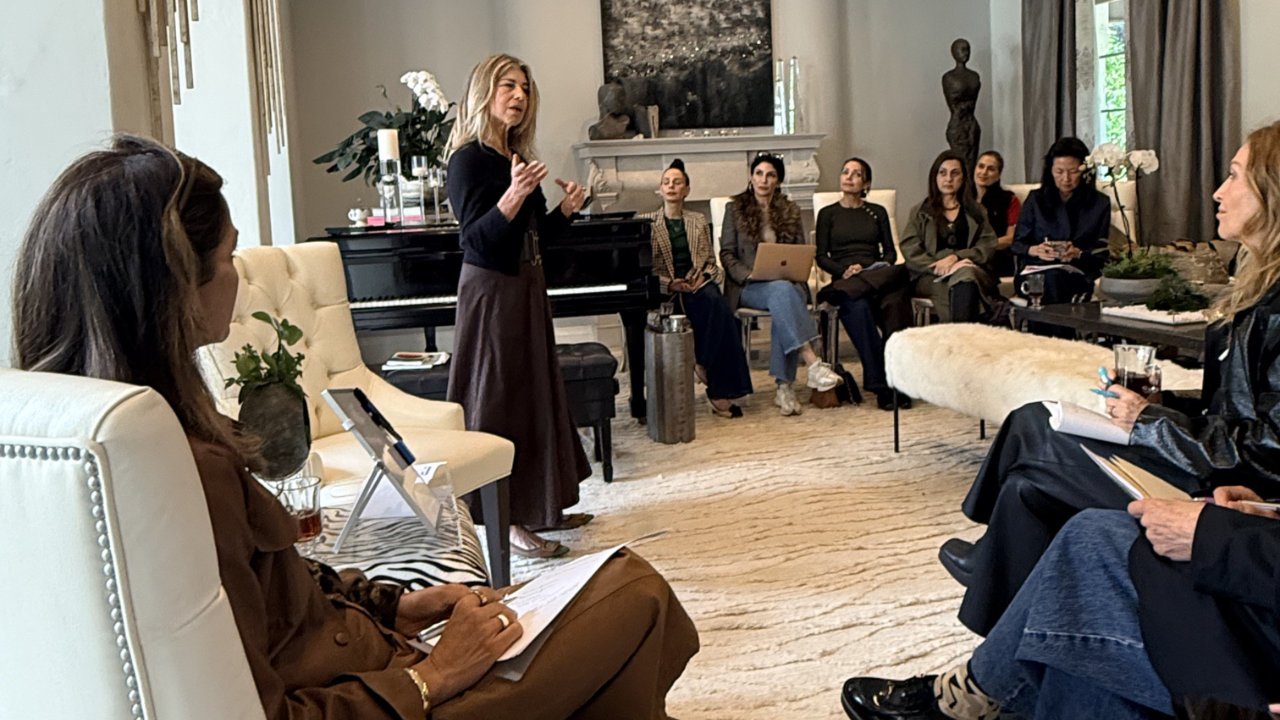
The agreements we make with each other shape the relationships we get. One of the most valuable relationships in my life is with the women in my private coaching group, The Wisdom Circle. By design, no one here is new to coaching, and the group's greatest value lies in the collective wisdom the women share with one another.

The Jewish New Year is almost upon us. And the recurring refrain in my mind is, "Phew. We made it!" I don't know what this year cost each of you, and I'm not going to pretend I do. But I know we're here. We took some dodgy turns and weren't sure we could handle the curves. We were scared and anxious and wanted to zone out with Netflix. We fell, got back up, and lived to tell.

In the last post, we did the work of a designer. We listened, researched, budgeted, and sketched. We designed the life. But I left you with a hard truth: a design isn't a building yet. An architect can produce the most beautiful set of plans you've ever seen, and you still can't live in a drawing. At some point, she has to stop sketching and build, because endless redesign is slow and expensive.

If I had it my way, I'd call what I do life design rather than life coaching. Life coaching implies that I somehow get my clients to find the discipline, heretofore missing in their lives, to finally reach their goals. Nothing could be further from the truth.