Zan Zendegi Azadi

I am a permanent resident of what the author, Franz Johansson calls The Intersection in his seminal work, The Medici Effect.
I live at the intersection of female, Iranian, American, Jew, Mother and Coach.
My platform is not a political one. But one cannot be a Professional Coach and not be a stand for a clear set of values.
I share the values that today is driving a revolution halfway around the world and also in my backyard.
Zan Zendegi Azadi
What are you a stand for?

I worshipped Intensity for more decades than I care to admit. "Go big or go home" was my motto, and I lived it everywhere. Instead of eating well most days, I would overeat for a stretch and then starve myself for a day to even the books. Instead of running a few miles regularly, I would run sporadically and then try to make up the lost mileage in one punishing weekend.

If I were allowed to keep only one tool in my coaching toolbox, with every other system and framework taken away, I know which one I'd keep. It's the one I call GIGO. Garbage in, garbage out. It's a crude name for an idea that turns out to be ancient. There's a line in Proverbs I've been sitting with, chapter 4, verse 23. It's usually translated, "Above all else, guard your heart, for from it flow the springs of life."

I hear these words often from my clients, regardless of age or background. They express a universal wish for the three C’s—Clarity, Courage, and Confidence—that so many people hope to gain from professional coaching. But let me share a dirty little secret of the work. The problems we think we're facing because we lack clarity, courage, or confidence are rarely the actual problem.
I'm working with a client who was a colleague of mine when I was a fashion executive. Working together is putting it generously, because I ran a flagship and she ran an entire corporate department. She's younger than I am, but I looked up to her the way a child looks at an adult, as though they're invincible.

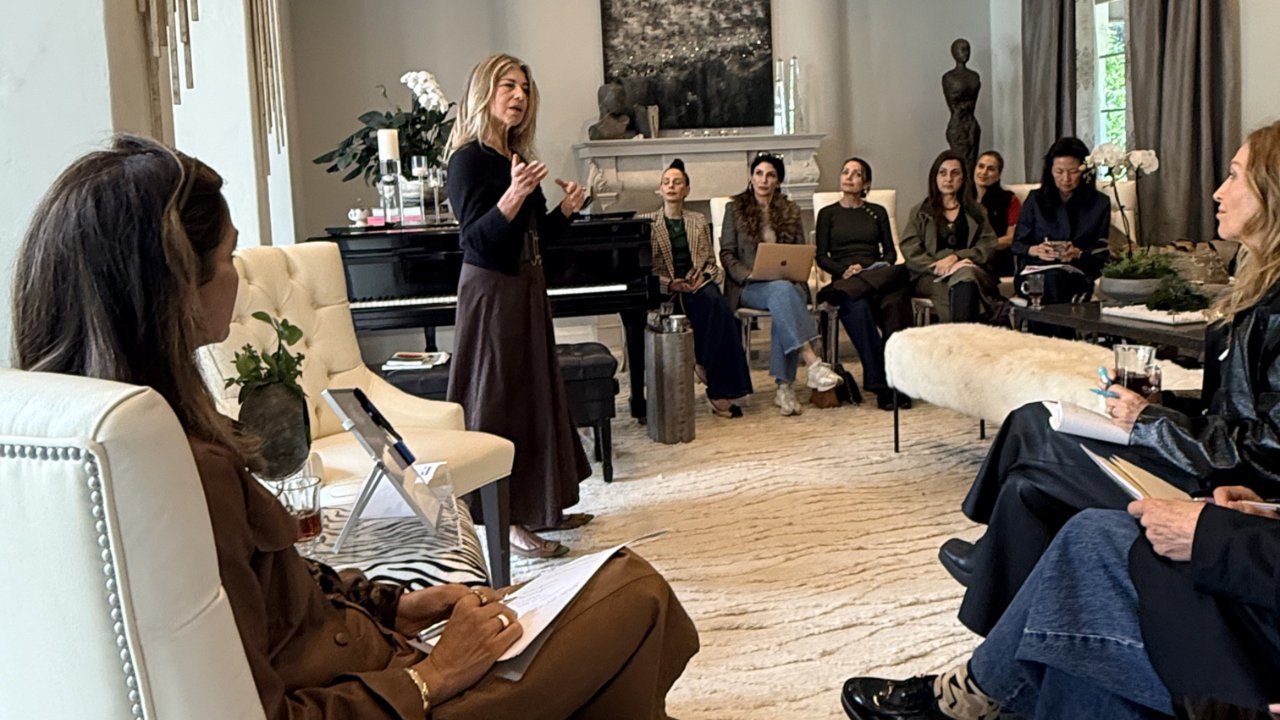
The agreements we make with each other shape the relationships we get. One of the most valuable relationships in my life is with the women in my private coaching group, The Wisdom Circle. By design, no one here is new to coaching, and the group's greatest value lies in the collective wisdom the women share with one another.
The Jewish New Year is almost upon us. And the recurring refrain in my mind is, "Phew. We made it!" I don't know what this year cost each of you, and I'm not going to pretend I do. But I know we're here. We took some dodgy turns and weren't sure we could handle the curves. We were scared and anxious and wanted to zone out with Netflix. We fell, got back up, and lived to tell.

In the last post, we did the work of a designer. We listened, researched, budgeted, and sketched. We designed the life. But I left you with a hard truth: a design isn't a building yet. An architect can produce the most beautiful set of plans you've ever seen, and you still can't live in a drawing. At some point, she has to stop sketching and build, because endless redesign is slow and expensive.

If I had it my way, I'd call what I do life design rather than life coaching. Life coaching implies that I somehow get my clients to find the discipline, heretofore missing in their lives, to finally reach their goals. Nothing could be further from the truth.
What if becoming more knowledgeable doesn't lead to more fulfillment and success in life? How would we live differently if we believed that? Would we consume less content, read fewer books, and pay less attention to experts? That seems like the natural result of such a belief. But seriously, who would want that? And what kind of Life Coach would recommend it?

I heard Shelly-Ann Fraser-Pryce say five words recently that I haven't been able to put down. She's the Jamaican sprinter, the most decorated 100-meter runner in history. She was on Mel Robbins' podcast, talking about doubt, age, and the belief that your best days are behind you. And in the middle of it, she said this: "Time will honor your greatness."